

Sound Support: Why the EDM Community Is Prioritizing Mental Health
By Mona Amini, MD, MBA
The conversation around mental health in the music industry is finally evolving, and the electronic dance music community is helping lead that shift. Recently, organizations across the dance music space have collaborated to create new mental health resources designed specifically for artists, touring professionals, event workers, and music industry creatives. The initiative reflects a larger cultural movement toward acknowledging the emotional demands of high-performance, high-visibility careers and creating more sustainable support systems within entertainment culture.
As both a psychiatrist and someone deeply connected to music culture, I believe this shift is incredibly important. Music can be healing, connective, energizing, and transformative. At the same time, the environments surrounding performance culture can place significant strain on the nervous system and mental wellbeing. Long travel schedules, irregular sleep, overstimulation, social pressure, constant visibility, and performance demands can all impact emotional regulation and recovery over time.
Mental wellness conversations within the EDM space are not simply trends. They are necessary conversations about sustainability, nervous system health, identity, creativity, and human connection.
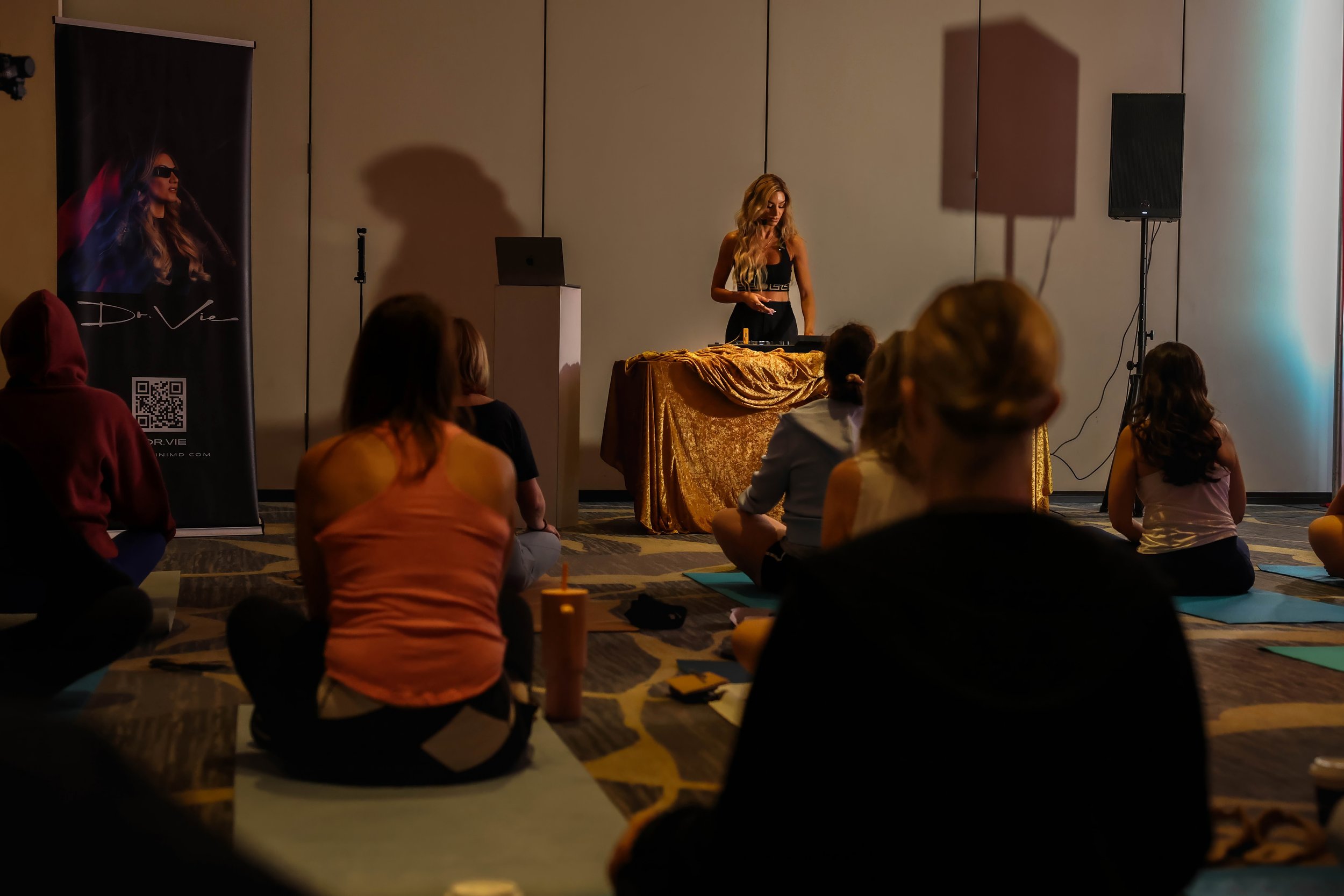
The Growing Mental Health Conversation in Dance Music
According to a recent Billboard and EDM.com article, Backline, a nonprofit focused on mental health support for music industry professionals, partnered with organizations within the electronic music community to create a wellness-focused toolkit designed specifically for people working in dance music culture. The goal is to make mental health education, support resources, and wellness tools more accessible within the industry. https://edm.com/lifestyle/free-mental-health-resource-guide-edm-community-backline/
This matters because many creatives operate in environments that normalize exhaustion, emotional suppression, overstimulation, and chronic stress. In high-energy industries, burnout is often mistaken for ambition. Overworking becomes glamorized. Constant connectivity becomes expected. Rest becomes delayed until the body forces it.
However, the nervous system keeps score.
Mental health support should not begin only after someone reaches a breaking point. Preventative wellness, emotional awareness, and sustainable recovery practices should become part of the culture itself.
Why Music and Mental Health Are Deeply Connected
Music affects the brain in profound ways. Research has shown that music can influence mood, memory, emotional processing, stress hormones, and even physiological states such as heart rate and nervous system activation. Music also creates community, which is one of the most protective factors for mental wellbeing.
This is one reason why the dance music community can become such a powerful space for healing and connection. Shared rhythm, movement, emotional expression, and collective experiences can create a temporary sense of emotional release and belonging. For many people, music becomes more than entertainment. It becomes regulation. It becomes identity. It becomes emotional processing.
At the same time, people working behind the scenes often experience significant invisible stressors. Touring schedules disrupt circadian rhythms and sleep quality. Constant stimulation can challenge emotional regulation. Social environments centered around nightlife can complicate boundaries around rest, recovery, substances, and emotional wellbeing.
When recovery is not prioritized, the nervous system can remain stuck in chronic activation for extended periods of time. Over time, this may contribute to burnout, anxiety, emotional exhaustion, sleep disruption, irritability, difficulty concentrating, and feelings of disconnection.
What the Nervous System Actually Needs
Mental wellness is not simply about eliminating stress. Stress is part of life, especially for creatives, entrepreneurs, performers, and high achievers. The goal is building enough recovery, regulation, and support so the nervous system can adapt without remaining in survival mode.
Some foundational nervous system supports include:
Sleep Protection
Sleep is one of the most critical components of emotional regulation, cognitive recovery, memory consolidation, and mental resilience. Consistent sleep disruption can significantly affect mood stability, focus, stress tolerance, and recovery capacity.
For touring artists and nightlife professionals, this often requires intentional recovery planning rather than perfection. Small strategies such as creating post-show wind-down routines, reducing unnecessary stimulation before sleep, supporting circadian rhythms when possible, and prioritizing recovery days can make a meaningful difference.
Sensory Regulation
The nervous system was not designed for endless stimulation without recovery. Loud environments, constant notifications, bright lights, travel fatigue, social performance, and nonstop scheduling can increase sympathetic nervous system activation over time.
Grounding practices matter. Quiet walks, stretching, breathwork, yoga nidra, nervous system-focused meditation, hydration, balanced nutrition, and intentional offline time can help create moments of physiological recalibration.
Emotional Processing
Many high performers become skilled at functioning while emotionally overwhelmed. Productivity can mask depletion for a long time. Emotional wellness requires creating space to process stress before it accumulates into burnout.
Therapy, journaling, trusted conversations, movement, creative expression, and mindful reflection can all support emotional processing and resilience.
Community and Connection
One of the strongest protective factors in mental health is feeling supported. Healthy community reduces isolation and reminds people they are not carrying everything alone. This is especially important in industries where visibility can create pressure to appear constantly “on.”
The EDM community has a unique opportunity to continue building spaces where emotional honesty, wellness support, and humanity are normalized alongside creativity and performance.
A More Sustainable Vision of Performance
I believe the future of performance culture will increasingly prioritize sustainability rather than constant self-sacrifice. Wellness and ambition do not have to compete with each other. Creativity thrives when the nervous system feels supported enough to access clarity, flexibility, and emotional presence.
This does not mean eliminating hard work or intensity. It means recognizing that recovery is productive. Boundaries are productive. Sleep is productive. Emotional regulation is productive. Mental wellness is not separate from performance capacity. It directly influences it.
The most resilient performers are not necessarily the ones who ignore their needs the longest. Often, they are the ones who learn how to recover effectively, regulate consistently, and build lifestyles that support both creativity and wellbeing.
The Bigger Cultural Shift
What Backline and the broader dance music community are helping create is larger than one toolkit. It reflects a growing recognition that mental health deserves visibility within industries historically associated with pressure, overstimulation, and emotional burnout.
That cultural shift matters.
When public conversations around wellness become normalized, people may feel more comfortable seeking support earlier. Stigma decreases. Education increases. Prevention becomes possible. Healing becomes less isolating.
Mental wellness should not only be discussed in moments of crisis. It should become part of how we build careers, communities, creative spaces, and daily routines.
Music has always had the power to help people feel seen, connected, energized, and emotionally understood. Supporting the mental health of the people creating those experiences is equally important.
Final Thoughts
The growing emphasis on mental health within the EDM industry is a meaningful step toward a more sustainable and human-centered creative culture. Wellness initiatives, education, community support, and accessible resources can help shift performance culture away from burnout and toward resilience.
At Mon’Vie Mind Wellness®, we believe mental wellness should support the whole person, including the nervous system, emotional wellbeing, creativity, recovery, and lifestyle habits that influence daily functioning. Sustainable success is not built solely on output. It is built on balance, regulation, recovery, and self-awareness.
The goal is not perfection. The goal is creating lives and environments where people can continue showing up creatively without abandoning their wellbeing in the process.
Give yourself permission to find therapy in the music, movement, and moments that reconnect you to yourself.
Call to Action
If you are navigating stress, burnout, emotional fatigue, or the demands of a high-performance lifestyle, know that mental wellness support matters. At Mon’Vie Mind Wellness®, we take a whole-person approach that integrates psychiatry, nervous system support, lifestyle wellness, and evidence-informed strategies designed to help individuals feel more grounded, focused, and resilient.
Explore our wellness offerings, stay connected for upcoming experiences, and follow along for more conversations at the intersection of mental health, music, creativity, and modern wellbeing.
Learn more at Mon’Vie Mind Wellness
